
“Fellow citizens, above your national, tumultuous joy, I hear the mournful wail of millions! whose chains, heavy and grievous yesterday, are today, rendered more intolerable by the jubilee shouts that reach them. If I do forget, if I do not faithfully remember those bleeding children of sorrow this day, ‘may my right hand forget her cunning, and may may tongue cleave to the roof of my mouth!’ To forget them, to pass lightly over their wrongs, and to chime in with the popular theme, would be treason most scandalous and shocking, and would make a reproach before God and the world.”
—Frederick Douglass, What, to the American Slave, is the 4th of July? (Jul. 5, 1852)
Back in 2018, at more than 8 months pregnant with my youngest, my family and I took a trip to the Netherlands. I was there to attend a conference hosted by the Institute on Statelessness and Inclusion (ISI) at Tilburg University.
The Rohingya People
The Office of the High Commissioner for Refugees—better known as as UNHCR—cites the international definition of statelessness as “a person who is not considered as a national by any State under the operation of its law.”1 One example of statelessness reveals itself in the plight of the Rohingya people.
The Rohingyas are a minority native to what is now Myanmar—formerly Burma. At the hands of the majority population and with government sponsored action, the Rohingyas have suffered murders—including infanticide—extreme levels of violence, sexual exploitation, poor living conditions, and deportation at sea. Employment opportunities are scarce and when available are often hazardous and for little pay.
I remember being struck by the horrific treatment of the Rohingyas and other minorities across the globe—of which there are many— and how much the patterns are similar to how Black2 people have been treated in the United States.
A More Recent Revelation
I’m reading a new book: Getting to Reparations: How Building a New America Requires a Reckoning With Our Past—I plan to write a full review once I’ve finished.3
In my reading, something became clear that I feel I must have known but failed to fully grasp. It is this: on the whole, the United States never intended to welcome Black people except as slaves. The revelation came as I read about the District of Columbia’s Compensated Emancipation Act.
Passed during the Civil War, the law provided some level of compensation for slave owners willing to emancipate their slaves. The law also made a provision of $100,000 “(almost $3 million today)” to grant each freed slave up to $100 for passage to Haiti or Liberia.4
At the time of its passing, Black people had been in the United States for centuries, and their labor had played a critical role in the development of the colonies and the independent nation that followed. For many, however, the possibility of equality was unthinkable.
As one anonymous writer—assuming the name of Justitia—stated,
“The same power that can liberate our negroes against our will, can and perhaps will confer upon them equality in civil and political privileges with the whites, so, for instance, that negroes may vote for municipal or other officers; may hold such offices themselves; and sit as jurors, magistrates, and judges in our courts.” —Washington Evening Star, Mar. 21, 1862 quoted in Getting to Reparations at 8.5
The law seems to echo this sentiment. Rather than set aside $100 per emancipated slave for the settlement of formerly enslaved people within the bounds of the District of Columbia, the government, instead, chose to charge the emancipated slave a fee of $.256 to record their new status and withhold any financial help outside the cost of deportation. Juxtaposed with the government’s desire to “bend over backwards to be fair”7 in determining the slave owners’ compensation for “lost property,” it is clear lawmakers were unwilling to countenance the idea of treating former slaves as new citizens.
That was 1862. In 1954, the author’s uncle—an attorney in private practice—leaves his hometown in South Carolina under threat of death. His crime: running for office and being too “uppity.”8
Lady Day
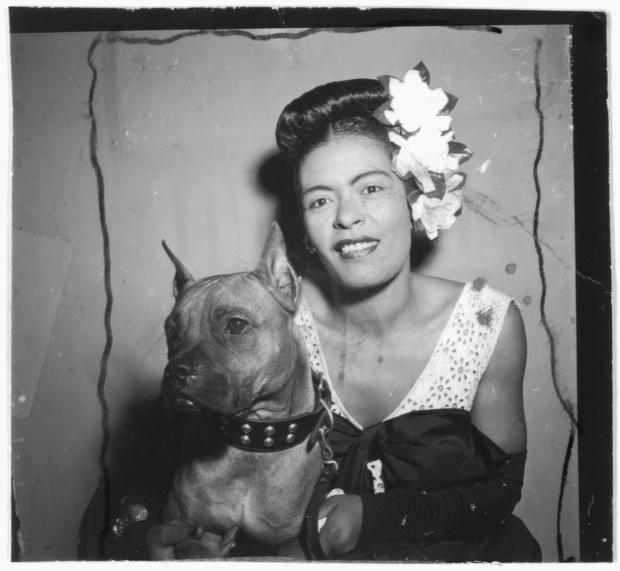
Lady Day at Emerson’s Bar and Grill—a phenomenal one-woman show that tells the story of Billie Holiday’s life—is yet another reminder of the horrors that were commonplace for Black folks during the early 20th century.
One example being Billie’s father, a WWI veteran. Suffering from poor lung health after his time in the war, he is unable to find a hospital that would treat a lung infection while on tour. After several attempts to find help, he dies at a veteran’s hospital in Texas that was too late to save him.
An Exercise in Extrapolation
New York’s Abandoned Property Law had—and, to my knowledge, still does have— an extremely aggressive extrapolation clause.
As I understand it, the law permits an agent to assume any found errors were repeated, in the same way, over an extensive period of time, and to use that figure to assess damages. For context, if you’re a small business owner that ever issued a gift card that was never used, this could apply to you. I find this use of extrapolation borderline criminal. For the purpose of this discussion, however, I feel some extrapolation is in order.
Thus, if we use Billie’s story as an example of harms Black people have suffered in America—the vulnerabilities to sexual assault [someone rapes Billie at aged ten and she ends her career in sex work when she is seriously injured]; the economic exploitation [to account for Billie’s unwelcome presence at white clubs they require band director Artie Shaw to pay a premium for meals Billie eats in the kitchen]; the degradation [Billie soils herself in front of her fellow band members (they were kind enough to eat with her) when a white club hostess refuses to let her use the restroom]; and the many human lives lost due to delayed or non-existent medical care, or the tens-of-thousands of lynchings [the so-called “strange fruit”], and setting aside, for the moment, similar patterns of abuse since Billie’s time—the level of suffering, trauma, and economic damage is astounding.
A Stateless People
I conclude, therefore—as I did in 2018—that Black people have, in essence, been stateless from the very beginning.
The government has repeatedly failed to adequately protect us from privatized violence. In other ways—police brutality, poorly run state asylums, dubious medical care, voting disenfranchisement, redlining, mass incarceration, etc.—the government has actively caused harm under the color of law.
In short, one century, seven decades, and nearly four years have passed since Mr. Douglass asked his infamous question, and, still, Black Americans have yet to realize the full benefits of citizenship.
An Answered Prayer
Had you walked into my dining room a couple of weeks ago, you would have found me praying on the phone with my mother. Feeling frustrated and powerless, I asked God to help me to see the humanity in others, even when it’s hard to do so. Not long after—as I was cooking a lunch of turkey bacon—God answered that prayer.
A part of me longs for a justice—true justice!—that has been denied for far too long; it desires to condemn this nation’s crimes as well as the people who are only all too happy to perpetuate the hate of our past. Yet, standing there in my kitchen, I remembered the harm that I have caused during my lifetime.
I too have been abusive, have followed the crowd even when I knew it was wrong, have been malignant, maternalistic, self-righteous, afraid, and reactive.
Yes, there have been consequences—as is only right—but I was still forgiven.
The Sweetest Thing
In No Name in the Street (1972), James Baldwin writes about his time in Paris and the persecution of the Algerian refugees there. Of the Algerian people, he said, “they knew exactly where home was. They, thus, held something within them which they would never surrender to France.” Black Americans, it seemed to Baldwin, “had surrendered everything, or had had everything taken away.”9 Here, I must respectfully disagree.
First, because, had that truly been the case, I don’t think we could have made it this far. Second, and most importantly, there is something in us all that can never be taken: our souls.
Let us take care, then, not to surrender such a precious gift.
- See, UNHCR page on statelessness: https://www.unhcr.org/us/what-we-do/protect-human-rights/ending-statelessness/about-statelessness (last visited Feb. 18, 2026). ↩︎
- Similar to other publications, I have capitalized the word “black” in reference to Black Americans. ↩︎
- Dorothy A. Brown, Getting to Reparations: How Building a Different America Requires a Reckoning With Our Past (2026). ↩︎
- Id. at 18; See also, An Act for the Release of Certain Persons held to Service or Labor in the District of Columbia, 37th Cong., Sess. 2 (Apr. 16, 1862). ↩︎
- This was one of twenty reasons articulated in opposition to the bill. Getting to Reparations at 8. ↩︎
- Id. at 21. ↩︎
- Id. at 17. ↩︎
- Id., at Introduction xx. ↩︎
- James Baldwin, No Name in the Street at 24 (1972). ↩︎